How to Plan Purchases More Carefully for a Healthier Financial Life
In a world designed to encourage instant gratification, the ability to pause and evaluate a transaction is a true competitive advantage. Impulse buying often leads to “buyer’s remorse,” a cluttered home, and a drained bank account.
However, learning how to plan purchases more carefully is not about deprivation; it is about intentionality. It ensures that the money you work hard to earn is directed toward items that provide genuine value, long-term utility, or authentic joy, rather than fleeting emotional spikes.
Strategic purchasing acts as a filter for your lifestyle. By moving from a reactive “see-and-buy” habit to a proactive planning system, you regain control over your environment and your future. This guide explores the psychological and practical steps needed to refine your spending habits.
Whether you are eyeing a new gadget or considering a wardrobe refresh, these methods will help you make decisions with clarity and confidence, ensuring your resources are always used efficiently.
1. The Power of the “Wait-and-See” Rule
The most effective barrier against impulse spending is time. When you feel a sudden urge to buy something, implement a mandatory waiting period.
For smaller items, a 24-hour rule is usually sufficient. For significant investments, consider a 30-day waiting period. This “cooling-off” phase allows the initial dopamine hit to subside, giving your logical brain the space to determine if the item is a true need or just a passing whim.
Often, you will find that after a few days, the desire to own the item has vanished entirely. If the urge persists, you can move forward knowing the purchase is intentional.
This simple habit adds a layer of “friction” to the buying process that is essential in an era of one-click shopping and digital wallets. It is the most direct way to ensure your spending aligns with your actual priorities rather than temporary impulses.
2. Conducting a “Value-per-Use” Analysis
Before any major purchase, calculate its “cost per use.” To do this, divide the price of the item by the number of times you realistically expect to use it over its lifespan. A $100 pair of shoes you wear 200 times ($0.50 per use) is a much better financial decision than a $40 dress you wear only once ($40.00 per use). This shift in perspective helps you prioritize quality over quantity.
When you focus on the long-term utility of an item, you are more likely to invest in durable, high-quality products that don’t need frequent replacement. This approach not only saves you money over several years but also reduces the physical clutter in your home.
By evaluating purchases through the lens of longevity, you become a more sophisticated consumer who values substance over the surface-level appeal of a low price tag.
3. Distinguishing Between Needs, Wants, and Wishes
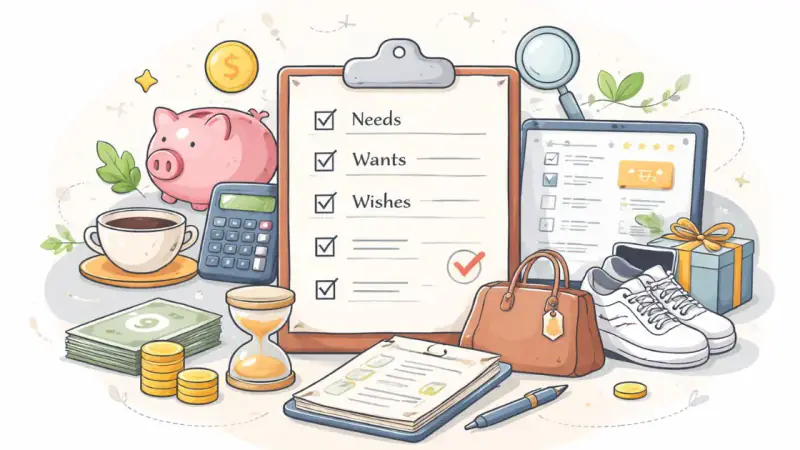
To plan your purchases more carefully, you must be honest about why you are buying an item. Create a simple hierarchy for your shopping list: Needs (essential for health, safety, or work), Wants (items that improve your life but aren’t vital), and Wishes (aspirational items for the future).
Categorizing a potential purchase helps you determine its place in your budget and prevents “lifestyle creep.”
If your budget is tight, focus exclusively on the “Needs” list. If you have extra funds, you can select one or two items from the “Wants” category. This structure prevents you from accidentally spending your rent or grocery money on a luxury item.
It provides a clear roadmap for your spending and ensures that your most critical obligations are always met first. Use the table below to see how this hierarchy helps organize your shopping:
| Category | Definition | Purchasing Strategy |
|---|---|---|
| Needs | Vital for daily functioning | Buy immediately (within budget) |
| Wants | Enhances lifestyle/comfort | Wait 48 hours; check savings |
| Wishes | Aspirational or luxury | Save specifically; wait 30 days |
4. Researching and Comparing Before You Commit
With the internet at your fingertips, there is no excuse for making an uneducated purchase. Before clicking “buy,” spend fifteen minutes researching alternatives. Read third-party reviews, compare prices across different retailers, and look for common complaints or recurring issues.
This due diligence ensures that you are getting the best possible value for your money and helps you avoid products that underperform.
In addition to price and quality, consider the total cost of ownership. Does the item require expensive maintenance? Does it use a lot of energy? Is it compatible with the tools you already own?
By looking at the full picture, you avoid “hidden costs” that can turn a cheap purchase into an expensive burden. Research turns you from a target of marketing into an informed decision-maker who cannot be easily swayed by flashy advertisements.
5. Implementing the “One-In, One-Out” Habit
A great way to curb unnecessary spending is to link it to the space in your home. Adopt a rule that for every new item that enters your house, an old one must be sold, donated, or discarded. If you want a new kitchen gadget, you must decide which existing one you are willing to part with. This creates a physical boundary that forces you to evaluate the true necessity of the new item.
This habit keeps your environment organized and prevents the slow accumulation of “stuff” that often leads to stress. It also encourages you to take better care of the things you already own.
When you know that buying something new requires giving up something old, you become much more selective about what earns a place in your life. It turns purchasing into a thoughtful exchange rather than a thoughtless addition.
6. Utilizing “Incognito” Browsing for Better Prices
E-commerce sites often use cookies to track your behavior and can sometimes raise prices based on your browsing history or your perceived interest in an item. To avoid this “dynamic pricing,” do your final price comparisons in an incognito or private browsing window. This ensures you are seeing the baseline price rather than a price tailored to your data profile.
Additionally, leave items in your digital cart for a day or two without checking out. Many retailers are programmed to send “abandoned cart” discount codes to your email to encourage you to finish the transaction.
By being patient and using these small technical tricks, you can often save 10% to 15% on items you were going to buy anyway. It is a simple way to use the retailer’s own systems to your financial advantage.
- Clear Cookies: Reset your browser to see unbiased pricing.
- Use Coupons: Check for valid codes before hitting the final “pay” button.
- Comparison Tools: Use browser extensions that track price history.
- Email Subscriptions: Sign up for newsletters to get a “first purchase” discount, then unsubscribe.
7. Visualizing the “Hours of Work” Cost
One of the most sobering ways to plan purchases more carefully is to translate the price into hours of your life. Calculate your “real hourly wage” (your take-home pay divided by the hours you work). When you look at a $200 item, don’t just see the price tag; see the 10, 20, or 40 hours of work it took to earn that money.
Ask yourself: “Is this item worth two full days of sitting at my desk?”
This mental shift makes the trade-off of spending much more tangible. It highlights the fact that money is essentially a representation of your time and energy. When you view purchases in this light, you are much less likely to waste your hours on items that don’t offer a significant return on investment.
It respects the effort you put into your career and ensures that your earnings are used to build the life you actually want to live.
8. Setting a “Fun Money” Monthly Allowance
Total restriction often leads to a “spending binge” later on. To avoid this, include a specific, manageable amount of “fun money” in your monthly budget. This is a pre-approved sum that you can spend on anything you want, no questions asked. Because this money is already accounted for, you can enjoy your small treats or impulse buys without guilt and without derailing your larger financial plans.
- Determine a realistic monthly amount for non-essential spending.
- Withdraw this amount in cash or move it to a separate “spending only” account.
- When the money is gone, your “fun” spending stops until the next month.
- Use this allowance for small impulses like coffee, books, or apps.
By giving yourself permission to spend within a boundary, you reduce the psychological pressure of a strict budget. It makes your overall financial plan much more sustainable for the long term. You gain the freedom to enjoy life in the present while maintaining the discipline needed to secure your future. It is the perfect balance of responsibility and enjoyment.
The Rewards of Intentional Consumption
Mastering how to plan purchases more carefully is a fundamental part of achieving financial independence. It is a skill that pays dividends every single day, protecting your hard-earned income and ensuring your home remains a sanctuary of useful, high-quality items.
By embracing the wait-and-see rule, researching your options, and valuing your time, you move from being a consumer to being a curator of your own life.
Remember that every spending decision is a vote for the type of life you want to lead. Choose to vote for clarity, quality, and freedom. As you refine these habits, you will find that the “high” of a planned, thoughtful purchase lasts much longer than the fleeting excitement of an impulse buy.
Stay patient, stay informed, and enjoy the peace of mind that comes with knowing your money is always working for you. Your journey toward smarter spending starts with the very next item on your list.