
How to Track Where Your Money Goes and Reclaim Your Financial Power
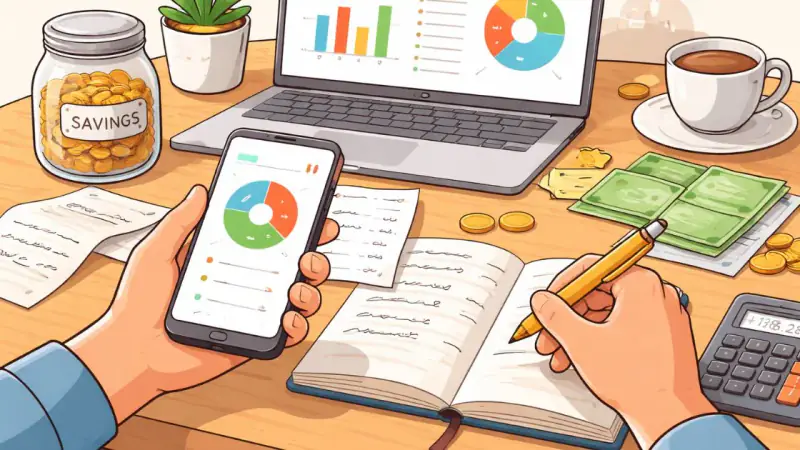
Many people experience a mid-month mystery: they know they’ve been working hard, but they have no idea where their paycheck has vanished. This “leaky bucket” syndrome happens when small, unrecorded expenses drain your accounts without you realizing it.
However, learning how to track where your money goes is the single most effective way to stop the bleed. It isn’t about restricting your joy; it’s about gaining the awareness necessary to ensure your money is funding your actual priorities.
When you start monitoring your cash flow, you move from a state of financial anxiety to one of absolute clarity. You no longer have to guess if you can afford a dinner out or if you’ll have enough for the mortgage; the data gives you the answer.
This guide explores the most practical, low-stress methods for recording your spending. By establishing a simple system that fits your lifestyle, you can identify your habits, eliminate waste, and start building the wealth you deserve.
1. Choosing the Right Tracking Method for You
The best tracking system is the one you will actually use. There is no “one size fits all” solution. Some people prefer the tactile nature of a “pen and paper” ledger, while others thrive using automated apps that sync directly with their bank accounts.
If you are tech-savvy, a personalized digital spreadsheet offers the most control and allows for deep data analysis. The key is to pick a method that feels like a habit, not a chore.
If you choose an app, look for one that categorizes spending automatically but allows for manual adjustments. If you prefer a manual approach, carry a small notebook or use a “notes” app on your phone to jot down cash transactions the moment they happen.
The goal is to capture the data accurately so you have a true reflection of your behavior at the end of the month. Experiment with different tools for 30 days to see which one sticks.
2. Categorizing Your Expenses for Clarity
Tracking is only useful if the data is organized. To truly understand your spending, you need to break it down into meaningful categories. Avoid being too vague (like “Misc”) or too granular (like “Carrot Spending”).
Instead, use broad buckets like Housing, Transportation, Food, Utilities, and Entertainment. This structure allows you to see exactly which areas of your life are consuming the most resources.
Categorization reveals your true values. You might discover that you are spending $400 a month on convenience coffee while your “Travel Fund” remains empty. This insight gives you the power to consciously redirect those funds.
By looking at your spending through the lens of categories, you turn a list of transactions into a strategic map for your future. See the table below for a common categorization framework:
| Category Type | Examples | Tracking Priority |
|---|---|---|
| Fixed Expenses | Rent/Mortgage, Insurance, Subscriptions | Low (Set once) |
| Variable Essentials | Groceries, Fuel, Utilities | High (Monitor trends) |
| Discretionary | Dining out, Hobbies, Shopping | Critical (Area of most waste) |
3. The “Daily Receipt” Habit
Small cash purchases are often the hardest to track because they don’t leave a digital trail. To master how to track where your money goes, you must handle these “invisible” transactions immediately.
Every time you spend cash, ask for a receipt or immediately enter the amount into your tracking tool. If you wait until the end of the day, you are likely to forget at least one or two small items.
These small amounts—a $3 snack here, a $5 tip there—can easily add up to $200 or more over a month. By recording them instantly, you close the gap between your “perceived” spending and your “actual” spending.
This habit builds a high level of financial mindfulness, making you more aware of the physical act of parting with your money. It turns spending into a conscious choice rather than an automatic reaction.
4. Conducting a “Weekly Reconciliation”
Don’t wait until the end of the month to look at your numbers. Spend ten minutes every Sunday evening reviewing your transactions from the past seven days. This weekly check-in prevents the task from becoming overwhelming and allows you to adjust your spending for the remainder of the month if you’ve already gone over budget in a specific category.
During this review, look for “subscription creep” or accidental double-charges. It’s also the perfect time to file any physical receipts and update your spreadsheet. This rhythm keeps your financial goals at the front of your mind.
When you know you have to face your numbers every Sunday, you are much more likely to make disciplined choices during the week. It’s a small time investment that pays massive dividends in peace of mind.
5. Identifying Your “Spending Triggers”
Once you have a month or two of data, look for patterns. Do you spend more on Friday nights because you’re tired? Do you shop online when you’re bored at work? Tracking your money reveals the emotional “why” behind your purchases. By identifying these triggers, you can develop healthier, free alternatives to satisfy those needs, such as taking a walk or calling a friend.
Understanding your triggers is a vital part of long-term financial health. It moves the conversation from “I can’t afford this” to “I don’t actually want this as much as I want my goal.”
This psychological shift makes discipline feel like a choice rather than a sacrifice. Your tracking data is essentially a mirror—use it to reflect on your habits and grow into a more intentional version of yourself.
6. Analyzing Your “Burn Rate” and Savings Gap
Tracking your spending allows you to calculate your monthly “burn rate”—the total amount of money required to sustain your lifestyle. When you subtract your burn rate from your total income, you find your “Savings Gap.” If the gap is small or non-existent, you now have the data needed to decide whether to increase your income or decrease your variable expenses.
Knowing your burn rate is essential for calculating your emergency fund. If you know you need exactly $3,000 a month to cover all essentials, you know that an $18,000 fund will give you a six-month safety net.
This precision replaces vague “hopes” with hard facts. It gives you a sense of security that no amount of guessing ever could. Use this data to build a solid foundation for your financial house.
- Fixed vs. Variable: Focus your energy on reducing the variable “wants” first.
- Automate Savings: Move your “Savings Gap” amount out of your account on payday.
- Audit Subscriptions: Use your tracking data to find and cancel unused services.
- Set Thresholds: Set alerts for when you reach 80% of a category’s budget.
7. Utilizing Visual Aids for Motivation
Numbers on a screen can sometimes feel abstract. To stay motivated, turn your tracking data into a visual representation. Create a simple pie chart showing your spending categories or a line graph showing your savings growth over time. Seeing a visual “win”—like a shrinking debt balance or a growing investment account—provides a dopamine hit that reinforces your good habits.
Many people find success with a “visual thermometer” for a specific goal, like a vacation or a new car. As you track your money and find savings, “fill in” the thermometer.
This makes the connection between your daily discipline and your future reward undeniable. Visualization turns the “boring” task of tracking into an exciting game where you are constantly looking for ways to win. It keeps the process engaging and fun.
8. Reviewing Your System Quarterly
As your life changes, your tracking system should evolve. Every three months, evaluate if your categories still make sense. Perhaps you’ve started a new hobby that needs its own bucket, or maybe you’ve moved and your transportation costs have shifted.
Use this time to refine your process and make it even more efficient. Automation is great, but a manual “tune-up” ensures the system is still serving you.
- Review your category limits and adjust based on actual spending.
- Check for any new recurring bills or price increases in utilities.
- Evaluate if your current tracking tool is still the best fit for your needs.
- Celebrate your progress and set a new, slightly more ambitious savings goal.
This quarterly review ensures that your financial organization remains sharp. It prevents “tracking fatigue” by keeping the system relevant and manageable. By staying proactive, you ensure that you never lose sight of where your money is going.
You are the CEO of your own life, and your tracking system is your most valuable financial report. Treat it with respect, and it will guide you toward prosperity.
The Freedom of Knowing Your Numbers
Learning how to track where your money goes is the first step toward true financial freedom. It replaces fear with facts and replaces impulse with intention. When you know where every dollar is going, you gain the power to change its destination. You are no longer a passenger in your financial life; you are the driver, steering toward the goals that matter most to you.
Start small. Don’t worry about being perfect in the first week. The goal is simply to start the flow of information. As you gather more data, you’ll find it easier and more rewarding to make adjustments.
Over time, this habit will become as natural as brushing your teeth, and the results will be visible in your growing bank balance and your decreasing stress levels. Take control of your data today, and watch how it transforms your entire financial outlook.