Practical Ways to Lower Household Expenses: Save More Now
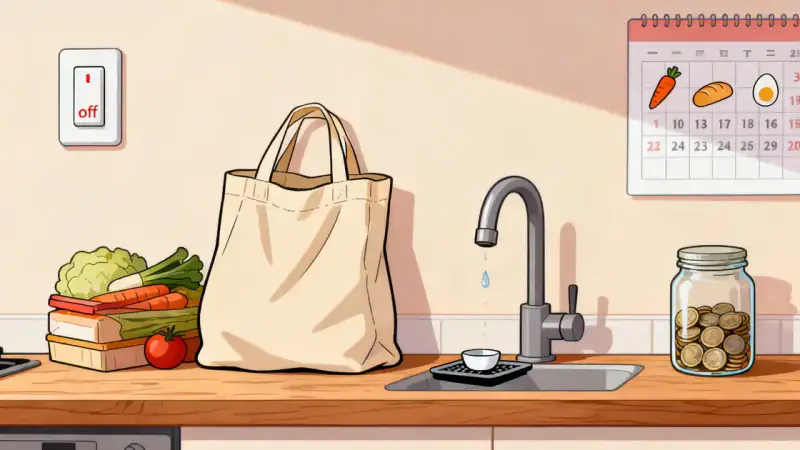
Managing a home involves a constant stream of costs, from utility bills and groceries to maintenance and entertainment. Without a clear strategy, these recurring outlays can quickly consume a significant portion of your income, leaving little room for savings or investment.
However, finding Practical Ways to Lower Household Expenses does not require a drastic lifestyle overhaul. Instead, it is about identifying the “silent leaks” in your budget and making intentional adjustments that compound over time.
Reducing your overhead is one of the most effective ways to increase your financial freedom. Every dollar you save on household operations is a dollar that can be redirected toward your long-term goals, such as retirement, travel, or an emergency fund.
By approaching your home as a small business—one that requires efficiency and regular audits—you can maintain a high quality of life while significantly lowering your monthly burn rate. Let’s explore the most effective strategies for streamlining your domestic finances.
1. Auditing and Optimizing Utility Consumption
Utility bills are often the most overlooked area for potential savings because they feel like fixed, inevitable costs. In reality, they are highly variable based on your habits and the efficiency of your equipment. Start by performing a simple home energy audit.
Check for drafts around windows and doors, and use weatherstripping to seal leaks. Adjusting your thermostat by just two degrees—lower in the winter and higher in the summer—can lead to a noticeable reduction in your monthly energy bill.
Additionally, consider switching to LED lighting, which uses significantly less energy and lasts much longer than traditional bulbs. Small habits, such as washing clothes in cold water and only running the dishwasher when it is completely full, also add up.
By being mindful of your consumption patterns, you can lower your environmental footprint while keeping more money in your pocket. These small, low-effort changes are the foundation of a more efficient household.
2. Mastering the Art of Strategic Grocery Shopping
Food is typically one of the largest variable expenses in any household budget. To lower these costs, move away from impulsive, daily trips to the store and toward a structured weekly plan. Meal planning is the ultimate tool for reducing food waste and preventing expensive last-minute takeout orders.
Before you shop, check your pantry and fridge to avoid buying items you already own, and stick strictly to a prepared list.
Buying in bulk for non-perishable staples—like rice, pasta, and cleaning supplies—can also offer significant unit-price savings. Furthermore, consider opting for generic or store brands for basic items; they are often identical in quality to name brands but cost 30% to 50% less.
By treating your grocery run as a mission rather than a leisure activity, you can significantly slash your monthly food bill. See the table below for a comparison of common grocery habits:
| Habit | Daily Impact | Monthly Saving Potential |
|---|---|---|
| Meal Planning & Prep | Avoids $15–$30 takeout | $300.00 – $600.00 |
| Switching to Store Brands | Reduces bill by ~20% | $80.00 – $150.00 |
| Bulk Buying Staples | Lowers unit cost | $20.00 – $50.00 |
3. Eliminating “Ghost” Subscriptions and Services
In the digital age, many households are plagued by “subscription creep.” We sign up for streaming services, gym memberships, and digital apps that we eventually stop using, yet the monthly charges continue. One of the most Practical Ways to Lower Household Expenses is to perform a monthly subscription audit.
Go through your bank statements and identify every recurring charge. If you haven’t used the service in the last 30 days, cancel it immediately.
Furthermore, look for opportunities to bundle services or switch to lower-tier plans. Many insurance companies, for example, offer discounts if you bundle your home and auto policies. Similarly, review your internet and phone plans; you may be paying for speeds or data caps that far exceed your actual needs.
Renegotiating these contracts once a year ensures that you are always paying the current market rate rather than a “legacy” price.
4. Adopting a “Repair and Repurpose” Mindset
We live in a “throwaway” culture, but significant savings can be found by choosing to repair items rather than replace them. Before discarding a piece of furniture, a garment, or a kitchen appliance, investigate if a simple repair can extend its life.
With the abundance of online tutorials, many basic home repairs—such as fixing a leaky faucet or mending a hem—can be done yourself for the cost of a few inexpensive tools or materials.
Repurposing is another way to save. Before buying something new, see if you can adapt an item you already own to fill the need. This minimalist approach not only saves money but also reduces the clutter in your home.
By valuing the items you already possess, you break the cycle of constant consumption and learn to appreciate the longevity of well-maintained possessions. This shift in perspective is key to sustainable household management.
5. Reducing Transportation and Commuting Costs
While often viewed as a separate category, transportation is a major component of household overhead. If you have a multi-car household, evaluate if you can downsize to a single vehicle or utilize public transit and carpooling more frequently.
For shorter trips, walking or cycling is not only free but also provides health benefits. If you do drive, maintaining proper tire pressure and observing speed limits can improve your fuel efficiency by up to 10%.
Additionally, consider the timing of your vehicle maintenance. Regular oil changes and filter replacements prevent major, expensive engine problems down the road. “Preventative” spending in this area is actually a form of saving, as it protects you from the high cost of emergency repairs or premature vehicle replacement.
Being intentional about how you get from point A to point B can put hundreds of dollars back into your budget every year.
6. Implementing “Low-Buy” or “No-Buy” Challenges
Sometimes, the best way to reset your household spending is to stop it entirely for a set period. A “No-Buy Month” involves committing to only spending money on essentials like housing, utilities, and basic groceries. This challenge forces you to get creative with what you already have—using up the food in your pantry, finding free local entertainment, and resisting the urge to shop for “wants.”
These challenges are excellent for identifying emotional spending triggers. When you can’t simply buy something to solve a problem or boost your mood, you find healthier, free alternatives.
Many families find that they don’t actually miss the extra spending and carry the lessons learned during the challenge into their regular routine. It is a powerful psychological reset that can permanently lower your household’s “baseline” spending level.
- Inventory your pantry: Eat what you already have before buying more.
- Free entertainment: Use local libraries, parks, and community events.
- Borrow instead of buy: Use tools like “Buy Nothing” groups for occasional needs.
- Delay purchases: Wait 48 hours before buying anything non-essential.
7. Optimizing Insurance and Financial Services
Insurance is a significant household expense that often remains static for years. However, the insurance market is competitive. Every year, take an hour to shop around for better rates on your homeowners’ and auto insurance. You can also lower your premiums by increasing your deductible, provided you have an adequate emergency fund to cover the difference if a claim is made.
Similarly, review your banking fees and interest rates. If you are paying a monthly maintenance fee for a checking account or high interest on a credit card, look for better options. Switching to a credit union or an online bank often eliminates fees and provides better interest rates on savings.
Managing the “cost of your money” is just as important as managing the cost of your groceries. A few phone calls can result in significant annual savings with zero change to your lifestyle.
8. Cultivating an In-House “DIY” Culture
From cleaning supplies to home décor, many common household items can be made at home for a fraction of the retail cost. Simple mixtures of vinegar, baking soda, and essential oils can replace a wide variety of expensive, chemical-heavy cleaners. Similarly, learning to cook your favorite “restaurant-style” meals at home can turn an expensive night out into a fun, low-cost family activity.
- Start by replacing one commercial cleaner with a DIY version.
- Learn one basic “from-scratch” recipe each week (like bread or pasta sauce).
- Look for free DIY tutorials before hiring a professional for minor home tasks.
- Involve the whole family in these projects to build a shared culture of thrift.
DIY culture isn’t about being “cheap”; it’s about being resourceful. It empowers you to take control of your environment and reduces your dependency on retail convenience. Over time, these skills become second nature, and the savings become substantial. Plus, there is a deep sense of satisfaction in knowing that you can maintain and improve your home with your own two hands.
The Path to a Leaner, More Resilient Home
Implementing Practical Ways to Lower Household Expenses is a journey toward greater financial resilience. By consistently looking for efficiencies and questioning your spending habits, you create a household that is prepared for economic fluctuations and focused on long-term growth.
It is not about deprivation; it is about optimization. You are choosing to spend your resources on the things that truly add value to your life while eliminating the waste that holds you back.
As you begin to see your bank balance grow, use that momentum to tackle your next goal. Whether it’s paying down debt or investing in your future, the money saved from your household budget is the fuel that will get you there.
Stay curious, stay resourceful, and remember that small changes, when practiced consistently, lead to extraordinary results. Your journey to a more affordable and organized home starts with the next choice you make.